
“Freedom and responsibility only work if you are willing to deliver.”
Max Heezemans – Managing consultant
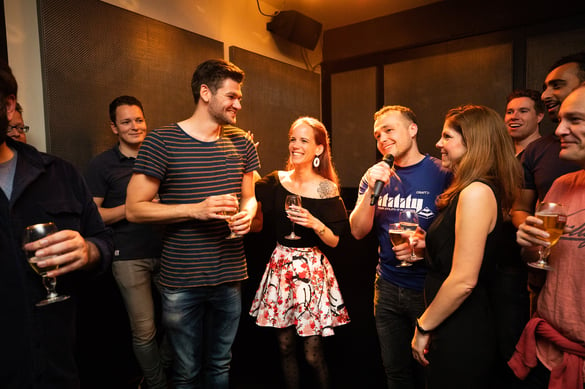
In 2019, Max Heezemans joined Itility straight from university, carrying a thesis on AI in healthcare. His first assignment, however, took him in a very different direction: large-scale IT infrastructure.
Data centers, migration plans and complex stakeholder environments were all unfamiliar territory. It turned out to be the best possible place to learn quickly.
Today, he is a Managing Consultant, working at the intersection of teams, customers, operations and strategy. He helps turn plans into coordinated execution and keeps complex programs moving when multiple interests, dependencies and deadlines come together.
Choosing Itility over the obvious route
After graduating, he received offers from several Big Four firms. The established route was open to him, but Itility felt like the better fit.
Here, the emphasis was not only on talking about change, but on making it happen.
He also decided early on that he did not want to join a graduate traineeship. “I had studied long enough. I just wanted to get started and see how it would go.”
The opportunity came immediately. In his first assignment as a data analyst, he had to understand how a complex IT landscape was structured. Which systems run where? What dependencies exist? What needs to move, and when? And what happens when something does not go according to plan?
Along the way, he learned not only about the technical side of IT, but also about the dynamics of large programs: making plans, identifying risks, connecting teams and ensuring that everyone works toward the same goal.
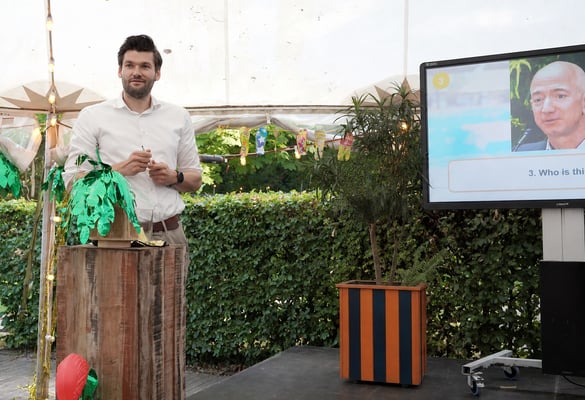
“Itility came across as a pragmatic organization. Serious and professional, but also smaller and more personal.”
From analysis to ownership
The move from data analyst to project manager came gradually. First came inventory, analysis and making sense of a complex IT landscape. Then the focus shifted toward execution, coordination and taking ownership of parts of the program.
His career reflects that progression. Over the years, Max has worked in different customer environments and held roles including Project Manager, Scrum Master and Product Owner, eventually moving into his current position as Managing Consultant.
The subject matter evolved as well, covering infrastructure, cloud, security, operations, applications and business process automation.
Breadth kept the work interesting. Every environment required something different. Sometimes the challenge was technical modernization. Sometimes it was continuity. In other cases, teams needed to collaborate differently. Increasingly, the question behind the assignment became just as important as the assignment itself.
Consultancy, in his view, is not simply about completing a project. It is about making technology work in practice, within the context of the organization using it.
“You start with IT. But at some point, you begin to understand what it is actually for. What does this mean for the business? Why are we doing this? What value are we creating?”
Impact you can feel
The combination of content, responsibility and impact is what appeals to him most. Many of the programs he has worked on involved business-critical IT, where continuity, reliability and careful execution were essential.
At one customer, the team helped transform an outdated and unstable environment into one that was modern, secure and reliable. Incident volumes fell sharply, allowing the organization to shift its attention from maintaining stability to improving and automating its business processes.
“That is when you realize how much impact you can create from an IT perspective. It became so normal that everything worked – and with that the organization could start focusing on what came next.”
When something does go wrong, the mentality of the people involved matters more to him than the process itself.
“When someone runs into something, there are always people who call and ask: can I help? Then we solve it together.”
This team spirit is an important part of Itility. It is not only about enjoying working together, but about shared responsibility. Everyone understands that the work needs to get done and that team members must be able to rely on one another.
Leading people, not copies of yourself
A large part of the Managing Consultant role revolves around teams. His approach to leadership developed over time rather than arriving fully formed.
“In the beginning, you tend to lead others in the way you would want to be led yourself.”
Experience taught him to pay closer attention to what individual team members actually need. One person needs variety and challenge. Another performs best with structure and a fixed rhythm. Some people need to be slowed down because they naturally keep pushing forward. Others benefit from encouragement to take greater ownership.
Most of those lessons came through practice: observing experienced colleagues, discussing difficult situations and seeing what worked across different customer environments.
As his own role developed, those conversations changed too. At first, he mainly learned from people with more experience. Gradually, they became conversations between equals, focused on exchanging perspectives and working through challenges together.
Working as one team with the customer
Customer impact starts with not acting like ‘just a vendor’. Itility partners with customers, working onsite with the customer team, solving problems together.
Instead of allowing a question to move slowly through a chain of tickets, you call or message each other directly, to solve the immediate issue and then keep thinking: why did this happen, and how can we prevent it from happening again?
Direct communication makes collaboration more effective. Especially in complex environments, it helps when people do not see each other only as customer and supplier, but as colleagues working toward a shared goal.
He has grown in this area as well. Early in his career, hierarchy sometimes felt like something to navigate carefully. Who can you call? Should something go through the official channels? Do you need someone at the same level to approach a decision-maker?
Today, his view is more pragmatic. If someone can make the necessary decision or help move something forward, you approach that person. Carefully and professionally, but without making the process unnecessarily complicated.
“In the end, everyone wants the same thing: to get it done. If you clearly explain what is needed, people usually think along with you.”
More flexibility, the same sense of responsibility
Since he joined Itility in 2019, working patterns have changed: after COVID hybrid working has become much more common.
Five days in the office and frequent travel across the country once felt normal. Now, there is a better balance between remote work and being physically present when it genuinely adds value. The core, however, has remained the same: informal, professional and results-driven.
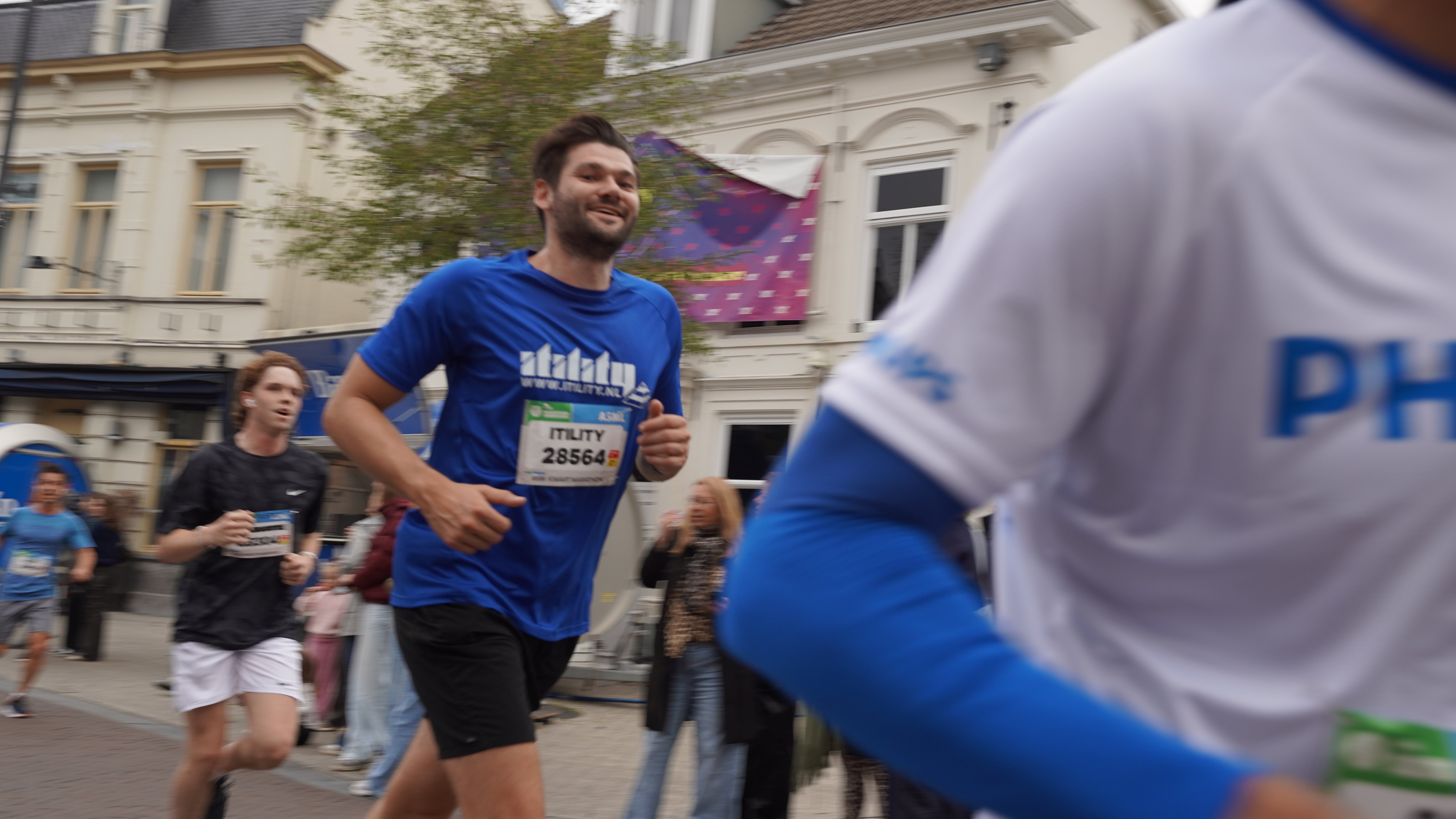
He also values the social side of Itility, although not every activity needs to appeal to everyone. Sports are the best fit for him: training for the Eindhoven Marathon, cycling with colleagues or working out together on a Friday afternoon.
Since recently becoming a father, some of those routines have naturally changed. Priorities shift, but his preference for staying active has not.
No fixed destination, still moving forward
Rather than defining every next step years in advance, the focus is on continuous growth and on taking on opportunities that match his strengths, interests and ambitions. What remains important is staying close enough to the content to understand what is happening, while working at a scale where he can make an impact on teams and customers.
Not purely managerial and not purely technical. The combination is what keeps the work interesting. Max stepped into unfamiliar territory, learned by doing and grew by taking the next step when it came. Seven years later, the same principles still guide him.
He never needed to know exactly where he would end up. Taking responsibility for what came next proved to be enough.



.jpg?width=345)